



The Mid-Year Health Reset: Why July Is the Perfect Time to Start Again
Table of Contents
Introduction
January has long been regarded as the month of fresh starts. As the calendar turns, people set ambitious goals, sign up for gym memberships, reorganise their kitchens, and promise themselves that this will finally be the year they prioritise their health. There is something psychologically powerful about beginning a new chapter, and the start of a new year naturally feels like the perfect opportunity to make positive changes.
Yet life rarely unfolds exactly as planned. As the months pass, work becomes busier, family commitments increase, travel disrupts routines, and unexpected responsibilities begin to fill the calendar. The healthy habits that once felt exciting can gradually become less consistent, not because people stop caring about their wellbeing, but because everyday life becomes more demanding.
By the time July arrives, many people find themselves in an unusual position. They may realise that some of their health goals have quietly slipped away, while others have been replaced by more immediate priorities. It is easy to interpret this as failure, but in reality it is simply part of being human. Habits naturally evolve as circumstances change.
Rather than waiting for another New Year to begin again, July offers something equally valuable: a chance to pause, reflect, and reset. The middle of the year provides an opportunity to make small adjustments, rebuild healthy habits, and approach the months ahead with renewed perspective. Sometimes the best time to start is not the beginning of the year, but the moment you decide your health deserves your attention again.
Why January Gets All the Attention
There is a reason New Year’s resolutions have become such a familiar tradition. Psychologists often describe the beginning of a new year as a “fresh start effect,” where a clear point in time creates the feeling that old mistakes can be left behind and new behaviours can begin. A new calendar represents possibility, making people more motivated to pursue personal goals.
This sense of renewal can be incredibly motivating. People often feel optimistic, energised, and ready to embrace positive changes. Health goals such as exercising regularly, eating more nutritious meals, improving sleep, or reducing stress frequently appear at the top of these resolution lists. For many, January feels like the official starting line for self improvement.
The downside of this mindset is that it can unintentionally convince us that meaningful change only belongs in January. If a routine slips in March or April, many people tell themselves they will simply try again next year. Instead of making small adjustments when needed, they postpone positive action because the symbolic moment has passed.
The reality is that our bodies do not follow the calendar. Every day presents an opportunity to make choices that support our wellbeing. Waiting for a particular date often delays progress that could begin immediately. Health is shaped by consistent decisions throughout the year, not by the month in which they begin.
How Healthy Habits Quietly Drift Away
Very few people wake up one morning and decide to abandon their healthy lifestyle altogether. More often, habits change gradually through a series of small interruptions that seem insignificant at the time. A late meeting leads to skipping a workout. A busy week results in more takeaway meals. A holiday changes sleeping patterns. Before long, these temporary adjustments begin to feel like the new normal.
Modern life naturally competes for our attention. Careers demand focus, family responsibilities require flexibility, and unexpected events can quickly disrupt even the most organised schedule. When time becomes limited, health habits are often among the first things to be postponed because their consequences are not immediately visible.
This gradual drift can happen without people even noticing. Missing one healthy meal does not seem important. Skipping exercise for a few days feels understandable. Sleeping slightly less each night appears manageable. However, when these small changes accumulate over weeks or months, routines begin to look very different from where they started.
Recognising this pattern is empowering because it reminds us that losing momentum is not the same as losing progress. Healthy habits often fade quietly, which means they can also be rebuilt through equally small and consistent actions.
A Reset Isn’t Starting From Zero
One of the biggest misconceptions about healthy habits is the belief that any interruption erases previous progress. People often think that if they have missed several weeks of exercise or fallen out of a balanced eating routine, they need to begin all over again. This mindset can make restarting feel overwhelming.
In reality, a reset is very different from starting from scratch. A person who has previously built healthy routines already understands what works for them. They know which breakfasts leave them feeling energised, which forms of movement they enjoy, and which daily habits help them feel their best. These experiences do not disappear simply because life became busy for a while.
Viewing a reset as a return rather than a restart changes the emotional experience entirely. Instead of feeling guilty about what has been lost, people can focus on reconnecting with habits that previously supported their wellbeing. This approach encourages self compassion rather than self criticism, making it easier to take positive action.
Health is rarely a straight line. There will always be periods when routines become less consistent due to work, travel, family commitments, or unexpected challenges. What matters is not avoiding these interruptions altogether, but recognising that every day offers another opportunity to return to behaviours that support long term wellness.

Small Wins Build Momentum
When people decide to improve their health, they often feel pressure to make dramatic changes immediately. They may plan to completely overhaul their diet, exercise every day, wake up earlier, and eliminate every unhealthy habit at once. While these intentions are admirable, they can also be difficult to maintain when life is already demanding.
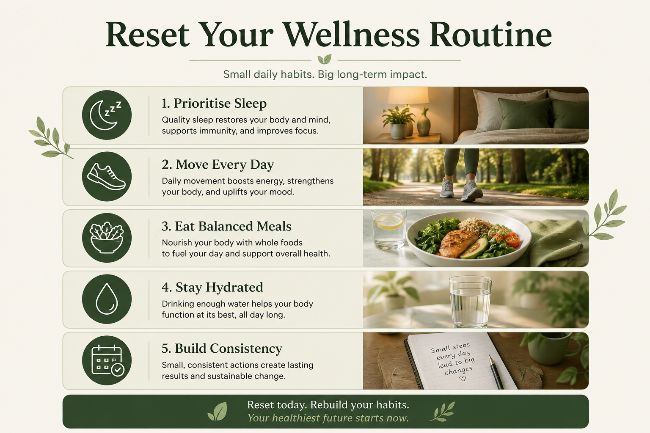
Behavioural research consistently suggests that sustainable change is usually built through small, repeatable actions rather than ambitious transformations. Simple improvements are easier to integrate into everyday life because they require less effort and create fewer disruptions to existing routines. Over time, these small actions begin to reinforce one another.
For example, choosing a healthier breakfast may lead to better energy throughout the morning. Feeling more energised might encourage a short walk after work. Better movement may contribute to improved sleep, which in turn makes healthy choices easier the following day. Progress often develops through this gradual momentum rather than through dramatic overnight success.
The beauty of a mid-year reset is that it does not require perfection. One positive decision today is more valuable than waiting for the perfect plan tomorrow. Small wins create confidence, and confidence often becomes the foundation for lasting healthy habits.
Build a Routine That Can Survive Busy Weeks
Many wellness routines fail not because they are ineffective, but because they are designed for ideal circumstances. They assume unlimited time, consistent motivation, and perfect schedules. Real life rarely provides any of these conditions.
Sustainable healthy habits are flexible enough to adapt to changing circumstances. They recognise that some weeks will involve longer working hours, family obligations, travel, or unexpected challenges. Instead of expecting flawless consistency, resilient routines allow room for adjustment while maintaining the core behaviours that matter most.
This might mean choosing a shorter walk instead of skipping movement altogether, preparing simpler meals during busy periods, or focusing on maintaining regular sleep even when other routines become less predictable. These smaller actions may appear modest, but they help preserve momentum until life becomes less hectic.
Building routines around reality rather than perfection makes them easier to maintain throughout the year. The goal is not to create a lifestyle that only works on your best days, but one that continues supporting your wellbeing even during your busiest weeks.
Think Beyond This Month
A mid-year reset is about more than feeling healthier over the next few weeks. It is an opportunity to think about the person you want to become by the end of the year and beyond. Every small habit adopted today contributes to a foundation that supports future wellbeing.
This perspective shifts attention away from quick fixes and toward long term consistency. Rather than asking how quickly results can be achieved, people begin asking whether their habits are sustainable enough to continue for months or even years. This change in thinking often leads to healthier decisions because it prioritises progress over urgency.
Preventive health is built on this principle. Many of the choices that influence future wellbeing may not produce immediate rewards, but they contribute to better health over time. Eating a balanced diet, staying physically active, prioritising rest, and managing stress are all investments in future quality of life.
July offers a valuable reminder that the year is far from over. The habits built during the second half of the year can be just as meaningful as those started in January. Every day presents another opportunity to invest in your future self.
Progress Is Built Through Returning
Perhaps the most important lesson in long term wellness is that progress is not measured by never making mistakes. Everyone experiences periods when routines become less consistent. Holidays, demanding work schedules, family commitments, illness, and unexpected life events affect even the healthiest individuals.
What separates sustainable healthy habits from short lived resolutions is the ability to return. Each time someone chooses to prepare a nourishing meal, take a walk, or prioritise sleep after a busy period, they reinforce the identity of someone who values their wellbeing. Returning becomes part of the habit itself.
This mindset removes the pressure of perfection. Missing a few days or even a few weeks does not erase months of positive choices. Instead of viewing setbacks as failures, they can be seen as temporary detours that naturally occur throughout life. Progress continues whenever we choose to begin again.
Ultimately, the middle of the year is not a reminder of goals that were abandoned. It is an invitation to reconnect with the healthy habits that matter most and carry them confidently into the months ahead.
Conclusion
July marks more than the halfway point of the year. It offers a natural opportunity to pause, reflect, and make meaningful adjustments before the months ahead become even busier. Healthy habits are not reserved for January, nor do they require the perfect moment to begin. They simply require the decision to start again.
If your routine has changed over the past few months, you are not alone. Life evolves, priorities shift, and healthy habits sometimes take a back seat. What matters is recognising that progress is always available through small, consistent actions that fit your current circumstances.
Rather than aiming for perfection, focus on rebuilding the routines that help you feel your best. The second half of the year still holds countless opportunities to invest in your health, one simple habit at a time.
Supporting Your Mid-Year Reset
If you’re looking to complement your renewed wellness routine with nutrient-dense nutrition, Chlorella Gold by Abeille d’Or provides chlorella, CGF, iron, and B vitamins as part of a balanced approach to supporting everyday wellbeing.