



The Health Habits That Are Easiest to Lose When Life Gets Busy
Table of Contents
Introduction
Most people do not abandon healthy habits because they stop caring about their wellbeing. More often, those habits quietly disappear when life becomes busy. A demanding project at work, family commitments, travel, or unexpected responsibilities can quickly change even the best intentions.
Interestingly, the habits that disappear first are rarely the unhealthy ones. Instead, it is often the small routines that support everyday wellbeing. Drinking enough water, preparing balanced meals, going for a walk, or getting to bed on time are usually the first things to be postponed when schedules become crowded.
This happens because healthy habits often require a small amount of planning and attention. When our time and mental energy are stretched, convenience naturally becomes a priority. We begin choosing whatever is easiest in the moment, even when we know those choices may not support our long-term wellbeing.
The good news is that maintaining healthy habits during busy seasons does not require perfection. It simply requires understanding which habits are most vulnerable and finding realistic ways to protect them when life becomes hectic.
Why Busy Lives Change Our Priorities
Being busy changes more than our calendars. It changes how we make decisions throughout the day. As responsibilities increase, our attention naturally shifts towards meeting deadlines, solving problems, and responding to immediate demands.
Health often becomes something we intend to think about later. We promise ourselves that we will cook healthier meals next week, return to the gym after this project ends, or catch up on sleep once life settles down. Unfortunately, busy periods often last longer than expected, causing these delays to accumulate.
This is not a sign of poor discipline. It reflects how the human brain prioritises urgent tasks over important ones. Immediate responsibilities usually receive attention first, while habits with long-term benefits are postponed because their consequences are less obvious.
Recognising this pattern helps explain why healthy routines can gradually fade, even among people who genuinely value their wellbeing.
The First Habit to Go Is Usually Nutrition
When time is limited, food choices often become more reactive than intentional. Instead of planning meals, many people eat whatever is available, quickest, or most convenient. While this may solve an immediate problem, it can also reduce the variety and quality of the foods consumed over time.
Vegetables are particularly vulnerable during busy periods. Unlike packaged snacks or takeaway meals, fresh produce often requires planning, preparation, and cooking. When schedules become demanding, these extra steps can feel difficult to manage.
Skipping vegetables for a day or two is not a cause for concern. However, when this becomes a regular pattern, overall nutrition may gradually become less balanced. This is why many nutrition experts encourage building realistic eating habits that are practical even during busy weeks.
Rather than aiming for perfect meals every day, it is often more helpful to focus on consistently including nourishing foods whenever possible.
Sleep Quietly Becomes a Lower Priority
Many people treat sleep as flexible, believing they can simply catch up later. During busy periods, it is often the first habit to be sacrificed in favour of finishing work, completing household tasks, or finding time for entertainment after a long day.
The challenge is that reduced sleep affects much more than energy levels. Feeling tired can make it harder to prepare balanced meals, stay physically active, concentrate at work, and make thoughtful decisions throughout the day. One disrupted habit can easily influence several others.
Over time, this creates a cycle where fatigue encourages convenience, and convenience makes it harder to return to healthier routines. Breaking this cycle often begins with recognising the importance of rest as one of the foundations of overall wellbeing.
Protecting sleep does not always require sleeping longer. Sometimes it simply means maintaining more consistent bedtime routines, even during demanding periods.

Movement Becomes Optional
Exercise is often viewed as something that requires a full hour at the gym, making it one of the easiest activities to postpone when schedules become busy. If there is not enough time for a complete workout, many people decide to skip movement altogether.
In reality, physical activity does not need to be all or nothing. A short walk, taking the stairs, stretching between meetings, or choosing to walk instead of drive for short distances all contribute to a more active lifestyle.
This mindset removes unnecessary pressure. Rather than focusing on achieving the perfect exercise routine, people can look for opportunities to move throughout the day. These smaller actions are often easier to maintain during demanding periods and help preserve the habit itself.
Consistency matters more than duration. A routine that survives a busy week is often more valuable than an ambitious plan that only works under ideal conditions.
Healthy Habits Often Disappear Together
One of the most interesting aspects of behaviour is that healthy habits rarely exist in isolation. They are connected in ways we may not immediately notice.
For example, sleeping poorly may reduce motivation to exercise. Less movement may influence energy levels. Feeling tired may encourage convenient food choices, while eating less nutritiously may affect how energetic we feel the following day. Small changes in one area often create ripple effects throughout our daily routine.
The opposite is also true. Protecting one healthy habit can make other positive behaviours easier. A good night’s sleep may encourage a healthier breakfast. Eating well can improve energy for movement. Going for a walk may reduce stress and improve sleep later that evening.
Instead of trying to improve everything at once, focusing on one or two key habits often creates momentum that naturally supports the others.
Protect the Habits That Matter Most
Busy seasons are inevitable, but abandoning every healthy habit is not. The key is identifying which routines are most valuable and making them as easy as possible to maintain.
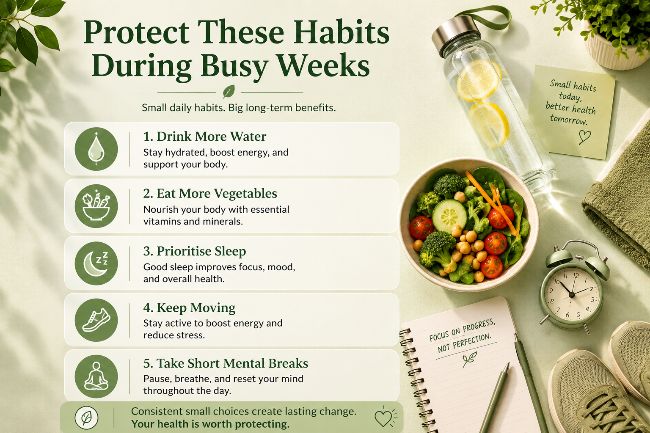
This may involve preparing simple meals in advance, keeping healthy snacks available, scheduling short walks into the working day, carrying a reusable water bottle, or setting realistic bedtime goals. These actions are not complicated, but they reduce the effort required to make healthier choices.
The objective is not perfection. It is resilience. Healthy routines should be flexible enough to survive changing schedules rather than depending on ideal circumstances.
When habits are designed to fit real life, they become easier to maintain regardless of how busy life becomes.
Busy Seasons Eventually End, Habits Can Stay
Every demanding period eventually passes. Projects are completed, holidays come to an end, children return to school, and schedules gradually become more predictable. The habits that survive these busy seasons are often the ones that continue supporting health over the long term.
Rather than judging yourself for the routines that temporarily slipped away, it is more productive to recognise that flexibility is part of sustainable wellness. Life changes constantly, and healthy habits should be able to adapt alongside it.
Maintaining wellbeing is not about avoiding busy periods. It is about learning how to carry a few essential habits with you, regardless of how full your calendar becomes.
Sometimes protecting one simple habit is enough to remind yourself that your health still matters, even on your busiest days.
Conclusion
Busy seasons are a normal part of life, and it is natural for routines to change as responsibilities evolve. The goal of healthy living is not to maintain a perfect schedule every day but to preserve the habits that matter most when life becomes demanding.
By recognising which routines are most likely to disappear and making them easier to maintain, we can build a wellness routine that is flexible, realistic, and sustainable. Small actions performed consistently often have a greater impact than ambitious plans that only work under perfect conditions.
When life gets busy, do not focus on doing everything. Focus on protecting the few habits that continue supporting your wellbeing every single day.
Supporting Your Wellness Routine
For those looking to complement a busy lifestyle with nutrient-dense nutrition, Chlorella Gold by Abeille d’Or provides chlorella, CGF, iron, and B vitamins as part of a balanced approach to supporting everyday wellness and healthy habits.