



What If Better Health Is Boring?
Table of Contents
Introduction
Why We Love Health Hacks
The Problem With Chasing the Next Trend
The Most Effective Habits Are Usually Unremarkable
Why Consistency Feels Less Exciting Than Results
The Wellness Industry Is Starting to Change
Boring Habits Create Remarkable Outcomes
A New Definition of Success
Conclusion
Introduction
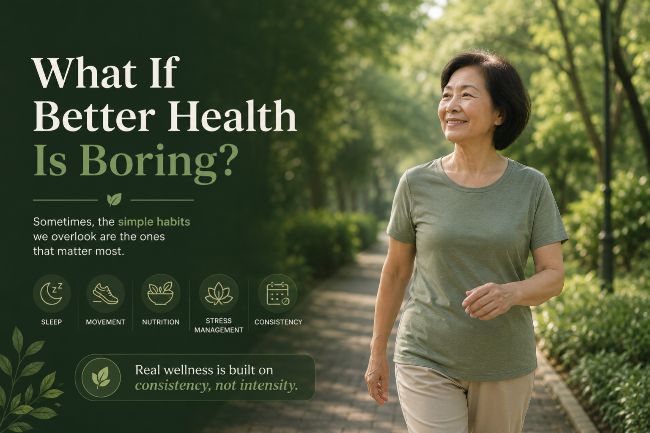
Modern wellness often feels exciting.
There are new diets, new supplements, new fitness trends, new challenges, and new health hacks appearing almost every week.
Yet despite all this innovation, the fundamentals of good health have remained surprisingly unchanged.
Sleep.
Movement.
Nutrition.
Stress management.
Consistency.
The question is whether we have become so focused on finding the next big thing that we have started overlooking the simple habits that matter most.

Why We Love Health Hacks
Humans are naturally attracted to shortcuts.
We enjoy discovering faster, easier, and more efficient ways to solve problems. This instinct has driven innovation throughout history and continues to influence how people approach health and wellness today.
The idea of a single strategy that delivers dramatic results is incredibly appealing. It offers hope, simplicity, and excitement. Whether it is a new diet, a trending workout, or a wellness challenge, people are often drawn to solutions that promise transformation without requiring years of effort.
This does not mean people are lazy. In many cases, they are simply overwhelmed. Modern life is busy, and finding sustainable ways to support health can feel difficult. As a result, shortcuts become attractive because they appear to simplify a complex process.
The challenge is that lasting wellbeing rarely depends on one breakthrough. More often, it is influenced by behaviours that are repeated consistently over time.
The Problem With Chasing the Next Trend
Health trends are not inherently bad. Many introduce valuable ideas and encourage people to become more interested in their wellbeing. However, constantly jumping from one trend to another can create a cycle of inconsistency.
A person may commit fully to a new strategy for several weeks before losing interest or encountering obstacles that make it difficult to maintain. Once the excitement fades, attention shifts to the next promising solution. Over time, this pattern can become exhausting.
The issue is not the trends themselves. It is the expectation that health should always feel exciting. In reality, many of the habits that contribute to long term wellbeing are repetitive and predictable.
Healthy eating is often repetitive.
Sleep routines are repetitive.
Daily movement is repetitive.
These behaviours may not generate headlines, but they remain important because they are sustainable.
The Most Effective Habits Are Usually Unremarkable
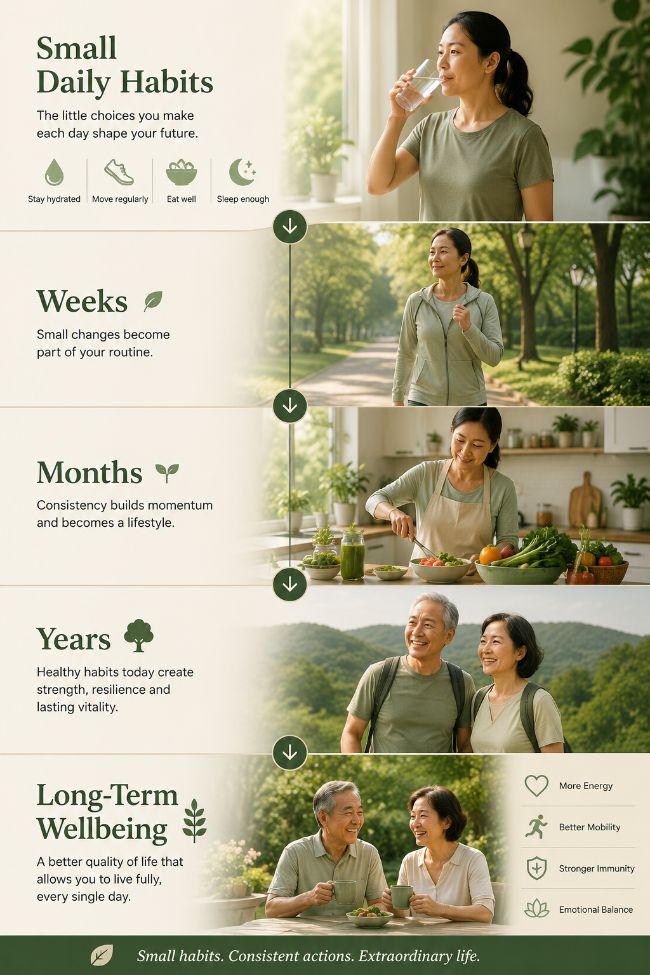
One of the most surprising realities about wellness is that many effective habits appear ordinary. Drinking enough water, going to bed on time, eating balanced meals, and staying physically active are not particularly exciting topics.
Yet these simple behaviours continue to appear in discussions about long term health because they work. Their effectiveness comes not from intensity but from consistency. They contribute to wellbeing through repetition rather than dramatic results.
This can feel disappointing in a culture that celebrates rapid transformation. People often expect meaningful progress to involve major sacrifices or complex systems. The idea that simple habits matter most can seem almost too straightforward.
However, simplicity is often what makes a habit sustainable. The easier a behaviour is to maintain, the more likely it is to become part of everyday life.
Why Consistency Feels Less Exciting Than Results
Results are motivating because they are visible. People enjoy seeing progress, receiving recognition, and achieving goals. Consistency, on the other hand, often happens quietly in the background.
No one celebrates drinking water for the hundredth consecutive day.
Few people post about going to bed at a reasonable time every night.
Daily healthy habits rarely generate excitement because they lack novelty.
Yet consistency is often the mechanism through which results occur. It creates the foundation that allows progress to accumulate gradually. Without consistency, even the most effective strategy struggles to produce meaningful outcomes.
Understanding this relationship helps shift attention away from chasing motivation and toward building routines that can be maintained regardless of mood or circumstances.
The Wellness Industry Is Starting to Change
Interestingly, many wellness conversations are beginning to move in a different direction. Rather than promoting extreme interventions, there is growing interest in sustainable health practices that fit naturally into daily life.
Consumers are becoming more skeptical of promises that sound too good to be true. They are asking whether a habit is realistic, practical, and maintainable over the long term. This shift reflects a broader understanding that health is not built through isolated efforts but through repeated actions.
The rise of wearable technology, health tracking, and behaviour science has also encouraged people to focus on consistency. Instead of looking for dramatic transformations, many individuals are paying attention to patterns and routines.
This evolution may represent one of the most important shifts in modern wellness: moving from optimization to sustainability.
Boring Habits Create Remarkable Outcomes
The word “boring” often carries a negative meaning, but when it comes to health, boring may actually be a compliment. A boring habit is usually predictable, manageable, and easy to repeat. It does not require extraordinary effort or constant decision making.
Walking every day can be boring.
Preparing balanced meals can be boring.
Prioritizing sleep can be boring.
Yet these habits continue to appear among individuals who maintain healthy lifestyles because they are practical enough to sustain over the long term.
The goal of wellness is not to make every day exciting. The goal is to create habits that support wellbeing consistently, even when life becomes busy or unpredictable.
A New Definition of Success
Perhaps it is time to redefine what success looks like in health and wellness. Instead of measuring success by dramatic transformations or temporary achievements, we can evaluate it through sustainability.
Can a habit be maintained next month?
Can it be maintained next year?
Does it fit naturally into everyday life?
These questions often provide more useful insights than focusing solely on short term outcomes. Health is not a project with a finish line. It is an ongoing process that evolves alongside the realities of daily living.
When viewed from this perspective, simple and repetitive habits become far more valuable than they initially appear.
Conclusion
Modern wellness often encourages people to seek the next breakthrough, shortcut, or trend. While innovation can be valuable, many of the habits that contribute to long term wellbeing remain remarkably simple.
Sleep, movement, balanced nutrition, hydration, and consistency may not be exciting, but they continue to support health because they are sustainable. In a world that celebrates novelty, there is something powerful about returning to the basics.
Perhaps better health is not supposed to be exciting every day. Perhaps it is supposed to be repeatable.
Supporting Sustainable Wellness Habits
For those looking to complement a balanced wellness routine with nutrient dense nutrition, Chlorella Gold by Abeille d’Or offers a convenient option that fits naturally into a lifestyle built around consistency and long term wellbeing.