



The Rise of Everyday Wellness: Why Extreme Health Trends Are Losing Appeal
Table of Contents
Introduction
For years, the wellness industry has been driven by extremes. Every few months, a new diet, exercise method, supplement trend, or health challenge seems to capture public attention. Social media feeds are filled with dramatic transformations, strict protocols, and promises of rapid results. While these trends often generate excitement, they can also create the impression that good health requires constant optimization.
The appeal of extreme health trends is understandable. People naturally want effective solutions, especially when it comes to improving energy, fitness, or overall wellbeing. The idea that a single strategy can unlock better health is both attractive and easy to market. However, many individuals eventually discover that maintaining these approaches over the long term is far more difficult than starting them.
In recent years, there has been a noticeable shift in how people think about wellness. Rather than chasing the latest trend, many are focusing on simpler and more sustainable habits. The conversation is moving away from perfection and toward consistency, practicality, and balance.
This change reflects a growing realization that health is not built through short bursts of intensity. More often, it is shaped by the small decisions people make every day.
The Wellness Industry’s Love Affair With Extremes
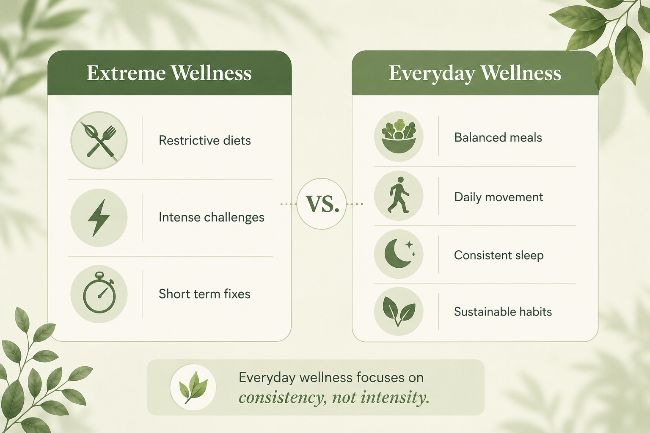
Health trends are not a new phenomenon. For decades, different diets, fitness programs, and lifestyle philosophies have promised to revolutionize the way people live. From restrictive eating plans to intensive workout challenges, extreme approaches often gain popularity because they offer a clear and compelling narrative.
The problem is that dramatic strategies tend to focus heavily on short term outcomes. They often emphasize rapid progress, strict rules, and immediate results. While this can create motivation initially, it may also lead to frustration when real life makes perfect adherence difficult.
Many people have experienced this cycle firsthand. They start a new wellness trend with enthusiasm, follow it diligently for a period of time, and eventually struggle to maintain the required level of commitment. The issue is rarely a lack of effort. More often, the approach simply does not fit comfortably into everyday life.
As consumers become more experienced with health trends, there is growing awareness that sustainability matters just as much as effectiveness.
Why Wellness Fatigue Is Becoming More Common
One consequence of constant exposure to health advice is wellness fatigue. People are bombarded with information about what they should eat, how they should exercise, when they should sleep, and which habits they should adopt. While access to information can be beneficial, too much advice can become overwhelming.
Conflicting recommendations add another layer of complexity. One trend encourages eliminating certain foods, while another promotes them. New wellness hacks emerge regularly, each claiming to offer unique benefits. As a result, many individuals feel uncertain about which advice is worth following.
This environment can create decision paralysis. Instead of feeling empowered, people become exhausted by the sheer number of options available. They spend more time researching health than actually practicing healthy behaviours.
The rise of wellness fatigue has encouraged many consumers to step back and reconsider what truly matters. Rather than seeking the perfect solution, they are focusing on habits that feel realistic, enjoyable, and sustainable.
The Shift Toward Everyday Wellness
In response to wellness fatigue, a growing number of people are embracing what might be called everyday wellness. This approach prioritizes simple habits that can be maintained consistently rather than dramatic interventions that require constant effort.
Everyday wellness does not reject ambition or self improvement. Instead, it recognizes that health is a long term journey rather than a short term project. The goal is not to achieve perfection but to create routines that support wellbeing over time.
Examples of everyday wellness include taking regular walks, preparing balanced meals, staying hydrated, getting adequate sleep, and managing stress through practical strategies. None of these habits are particularly glamorous, yet they remain among the most effective foundations for long term health.
This shift reflects a broader understanding that sustainable habits often outperform extreme efforts when measured over months and years.
Why Consistency Is Becoming the New Goal
One of the most significant changes in modern wellness is the growing emphasis on consistency. Health experts, behavioural scientists, and wellness advocates increasingly agree that repeated actions often matter more than occasional intense efforts.
This perspective has helped reshape how people approach their health goals. Instead of focusing solely on outcomes such as weight loss or fitness milestones, individuals are paying more attention to the systems and routines that support those outcomes. The process itself becomes more important than any single result.
Consistency also reduces pressure. People no longer need to follow rigid plans perfectly to feel successful. Missing a workout or enjoying an indulgent meal does not derail progress because the focus remains on overall patterns rather than isolated events.
This mindset encourages a healthier relationship with wellness. It allows people to pursue improvement without becoming trapped in cycles of guilt, restriction, or unrealistic expectations.
Social Media Is Changing How We View Health
Social media has played a major role in shaping wellness trends, but its influence is evolving. While highly curated transformation stories and extreme routines continue to attract attention, audiences are increasingly drawn to more authentic and relatable content.
Consumers are becoming more skeptical of promises that sound too good to be true. They are asking whether a particular strategy is realistic, sustainable, and supported by evidence. This shift reflects growing maturity within the wellness space.
At the same time, creators and health professionals are beginning to emphasize balance over perfection. Discussions around rest, recovery, mental wellbeing, and realistic expectations have become more common. These conversations resonate because they acknowledge the realities of everyday life.
The result is a wellness culture that is gradually becoming less focused on extremes and more focused on practical habits that support long term wellbeing.
Simplicity Often Wins
One of the most surprising lessons in health is that effective habits are often remarkably simple. Walking regularly, eating a variety of nutrient rich foods, staying active, sleeping well, and managing stress may not sound revolutionary, but these behaviours remain among the most powerful contributors to overall wellness.
The appeal of complexity is understandable. Complicated strategies often feel more impressive than simple ones. However, complexity can also create barriers that make healthy habits harder to maintain. Simplicity, on the other hand, increases the likelihood of consistency.
This does not mean people should stop exploring new ideas or learning about health. Rather, it suggests that new information should complement foundational habits rather than replace them. Trends may come and go, but the basics continue to matter.
In many ways, the future of wellness may look surprisingly familiar. It may involve fewer extreme interventions and greater appreciation for sustainable everyday habits.
A Return to Sustainable Health
The growing popularity of everyday wellness reflects a deeper cultural shift. People are increasingly recognizing that health is not something that can be achieved through temporary efforts alone. It requires habits that fit into real life and can be maintained despite busy schedules and changing circumstances.
This realization is encouraging because it makes wellness more accessible. Individuals do not need expensive programs, complicated routines, or extreme commitments to support their health. They can begin with small, manageable actions that gradually become part of daily life.
Sustainable health is not about doing everything perfectly. It is about creating a lifestyle that supports wellbeing while remaining flexible enough to adapt to life’s inevitable challenges. This balance helps individuals stay engaged with their health without feeling overwhelmed.
As extreme trends continue to lose appeal, everyday wellness is emerging as a practical and empowering alternative that prioritizes long term success over short term excitement.

Conclusion
The wellness industry is evolving. While extreme health trends continue to capture attention, many consumers are shifting their focus toward sustainable habits that support long term wellbeing. This change reflects a growing understanding that health is built through consistency rather than intensity.
Everyday wellness encourages people to simplify their approach, focus on foundational habits, and create routines that fit naturally into their lives. By prioritizing balance over perfection, individuals can support their wellbeing in a way that feels both realistic and sustainable.
Supporting Everyday Wellness Habits
For those looking to make nutrient dense greens part of a simple daily wellness routine, Green Kale by Abeille d’Or offers a convenient way to incorporate kale into a balanced lifestyle focused on consistency rather than complexity.