



Brain Health Starts Earlier Than You Think
Table of Contents
Introduction
Why Brain Health Is a Lifelong Journey
The Modern Challenges Facing Our Brains
Sleep: The Most Underrated Brain Health Habit
Movement Supports More Than Physical Fitness
Lifelong Learning Keeps the Brain Engaged
Nutrition and the Bigger Picture
Small Choices Shape Long Term Outcomes
Conclusion

Introduction
When people think about brain health, they often associate it with older adults. Conversations about memory, cognitive function, and mental sharpness are frequently linked to aging, retirement, or later stages of life. As a result, many younger adults assume brain health is something they can think about decades from now.
The reality is quite different. Brain health is not something that suddenly becomes important at a certain age. It is influenced by daily habits, lifestyle choices, and environmental factors throughout life. Just as physical fitness is built over time, cognitive wellness is shaped by patterns that develop over years and even decades.
This perspective is becoming increasingly relevant in today’s world. Modern life places significant demands on the brain, from managing information overload and constant connectivity to balancing work, family, and personal responsibilities. Many people spend large portions of their day engaged in mentally demanding activities without giving much thought to the habits that support cognitive wellbeing.
Understanding that brain health starts earlier than most people realize can encourage a more proactive approach to wellness. Rather than waiting until concerns arise, individuals can focus on building habits that support cognitive wellness throughout life.
Why Brain Health Is a Lifelong Journey
The brain is one of the most complex and remarkable organs in the human body. It is responsible for memory, learning, decision making, emotional regulation, creativity, and countless other functions that influence everyday life. Despite its importance, brain health is often overlooked until noticeable changes occur.
One reason for this is that cognitive wellbeing develops gradually. Just as a single workout does not determine physical fitness, one night of poor sleep does not define brain health. Instead, cognitive wellness is influenced by repeated behaviours and long term patterns that accumulate over time.
This understanding has shifted the way many health professionals approach brain health. Rather than focusing solely on aging related concerns, there is growing interest in supporting cognitive wellness across all stages of life. Healthy habits adopted earlier can contribute to a stronger foundation for future wellbeing.
Viewing brain health as a lifelong journey encourages individuals to think proactively rather than reactively. It transforms cognitive wellness from a future concern into a present day priority.
The Modern Challenges Facing Our Brains
While every generation has faced unique challenges, modern lifestyles present demands that are particularly relevant to cognitive wellness. Many people spend their days switching between emails, messages, meetings, social media, and countless digital distractions. The brain is constantly processing information, often with little opportunity for rest.
This environment can contribute to mental fatigue, reduced focus, and difficulty maintaining attention. Even when individuals are not actively working, digital devices continue to compete for mental resources. Notifications, news updates, and entertainment platforms create a constant stream of stimulation.
At the same time, many traditional opportunities for mental recovery have become less common. Moments that once involved reflection, quiet observation, or simple rest are often filled with additional information and screen time. The result is a lifestyle that keeps the brain engaged almost continuously.
Recognizing these challenges is important because it highlights the need for intentional habits that support cognitive wellness in an increasingly connected world.
Sleep: The Most Underrated Brain Health Habit
When discussing brain health, people often focus on mental exercises, learning strategies, or productivity techniques. While these can be valuable, one of the most important contributors to cognitive wellness is often overlooked: sleep.
Sleep provides an opportunity for the brain to recover, process information, and prepare for the next day. During sleep, the brain performs essential functions related to memory, learning, and overall cognitive performance. Consistently poor sleep can affect focus, decision making, mood, and mental energy.
Despite its importance, sleep is frequently sacrificed in favour of work, entertainment, or other responsibilities. Many individuals view sleep as flexible or optional, even though it plays a foundational role in overall wellbeing.
Improving sleep habits does not require complicated interventions. Consistent sleep schedules, reducing late night screen exposure, and creating a supportive sleep environment can all contribute to better rest and healthier cognitive function.

Movement Supports More Than Physical Fitness
Physical activity is often discussed in relation to weight management, cardiovascular health, and fitness goals. However, movement also plays an important role in supporting overall wellbeing, including cognitive wellness.
Regular movement encourages healthy circulation, supports energy levels, and contributes to overall quality of life. Beyond physical benefits, many individuals report improved focus, mood, and mental clarity after engaging in regular physical activity.
Importantly, movement does not need to involve intense workouts or complicated fitness routines. Walking, stretching, recreational sports, and other forms of enjoyable activity can all contribute to a more active lifestyle. Consistency often matters more than intensity.
The connection between movement and cognitive wellness highlights an important principle: habits that support physical health frequently support brain health as well.
Lifelong Learning Keeps the Brain Engaged
One of the most fascinating characteristics of the human brain is its ability to adapt and learn throughout life. Learning new skills, exploring unfamiliar topics, and engaging in mentally stimulating activities can help keep the mind active and engaged.
Lifelong learning does not require formal education. Reading books, learning a language, exploring a hobby, playing a musical instrument, or developing new professional skills can all challenge the brain in positive ways. These activities encourage curiosity and provide opportunities for mental engagement.
Many people mistakenly believe learning is primarily for younger individuals. In reality, maintaining curiosity and intellectual engagement can be beneficial at any stage of life. The goal is not mastery but continued growth and exploration.
This mindset encourages individuals to view cognitive wellness as an active process rather than a passive outcome.
Nutrition and the Bigger Picture
Nutrition is often discussed in terms of physical health, but it is also part of the broader conversation about cognitive wellness. The foods people consume contribute to overall wellbeing and influence many aspects of daily life.
Rather than focusing on individual nutrients or quick fixes, many experts encourage a balanced approach that emphasizes consistency and variety. Nutrient dense foods, regular eating patterns, and overall dietary quality often play a more important role than chasing the latest nutrition trend.
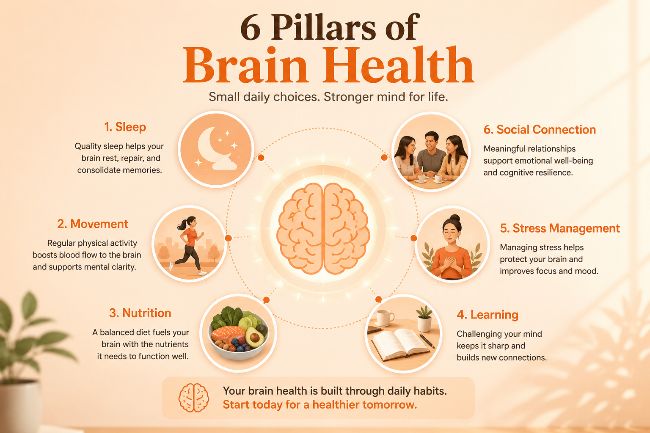
The key takeaway is that brain health is not supported by one habit alone. Sleep, movement, learning, stress management, social connection, and nutrition all work together as part of a larger lifestyle picture. Focusing on the broader pattern often provides greater benefits than concentrating on any single factor.
This perspective reinforces the idea that cognitive wellness is built through everyday habits rather than isolated actions.
Small Choices Shape Long Term Outcomes
One of the most empowering aspects of brain health is that many supporting habits are already within our control. While genetics and life circumstances influence wellbeing, daily behaviours also play an important role in shaping long term outcomes.
The challenge is that these habits often seem insignificant in the moment. Going to bed slightly earlier, taking a short walk, reading a few pages of a book, or choosing a nutritious meal may not feel transformative. Yet repeated consistently, these actions contribute to broader patterns that support overall wellness.
This understanding shifts the conversation away from perfection and toward sustainability. Individuals do not need to overhaul their lives overnight. Instead, they can focus on small actions that are realistic enough to maintain over time.
Ultimately, brain health is less about dramatic interventions and more about creating a lifestyle that supports cognitive wellness day after day, year after year.
Conclusion
Brain health is not something that begins in older adulthood. It is influenced by habits, routines, and choices that develop throughout life. By understanding the importance of sleep, movement, lifelong learning, nutrition, and other lifestyle factors, individuals can take a more proactive approach to cognitive wellness.
The good news is that supporting brain health does not require perfection. Small, consistent actions often have a greater impact than occasional dramatic efforts. By focusing on sustainable habits, people can create a stronger foundation for cognitive wellbeing both now and in the future.
Supporting Your Cognitive Wellness Routine
For those looking to complement healthy lifestyle habits with nutritional support, IQ No.1 by Abeille d’Or contains bee pollen, royal jelly calcium, vitamin B complex, beta carotene, and rooibos tea extract as part of a formulation designed to support overall brain function, mental focus, and mood balance.