



The Daily Greens Habit: Small Changes That Make a Big Difference
Table of Contents

Introduction
When people decide to become healthier, they often start with ambitious goals. They promise themselves they will wake up earlier, exercise every day, cook all their meals from scratch, and completely transform their lifestyle overnight. While these intentions are admirable, they often create unrealistic expectations that become difficult to sustain once everyday life gets in the way.
Research into habit formation consistently shows that lasting change rarely comes from dramatic action. Instead, it is usually the result of small behaviours repeated consistently over time. The healthiest people are not necessarily those with the most discipline. More often, they are individuals who have built routines that make healthy choices easier to repeat day after day.
This principle applies to nutrition just as much as it does to fitness, productivity, or personal growth. Many people know they should eat more vegetables, but knowing and doing are two different things. The challenge is not a lack of information. The challenge is creating habits that fit naturally into real life.
One of the simplest examples is developing a daily greens habit. While it may seem like a small change, consistently incorporating more greens into your routine can become a powerful foundation for long term wellness.
Why Small Habits Often Beat Big Goals
There is a common belief that significant results require significant effort. This idea often leads people to pursue extreme diets, intensive workout programs, or strict wellness plans that demand immediate lifestyle changes. While these approaches may create short bursts of motivation, they are often difficult to maintain over the long term.
Behaviour experts have found that habits become sustainable when they require minimal resistance. The easier an action is to perform, the more likely it is to become part of everyday life. This is why small habits often outperform ambitious goals. A simple action repeated consistently can create far greater impact than an intense effort that lasts only a few weeks.
Consider the difference between deciding to eat perfectly every day versus simply adding one serving of greens to your routine. The first goal can feel overwhelming and restrictive. The second feels manageable and achievable. Over time, these small actions accumulate and contribute to meaningful change.
Many successful wellness journeys begin with one simple habit. The goal is not perfection. The goal is consistency.
The Power of Compound Wellness
Most people understand the concept of compound interest in finance. Small investments made consistently over many years can produce significant returns. The same principle applies to health. Every healthy choice may seem insignificant on its own, but over time those choices begin to accumulate.
Daily nutrition is one of the clearest examples of this effect. A healthy meal may not transform your wellbeing overnight, just as one unhealthy meal is unlikely to cause immediate problems. What matters is the pattern created through repeated choices. The body responds to what we do consistently rather than occasionally.
This perspective can be incredibly empowering. Instead of feeling pressured to make drastic changes, individuals can focus on improving one habit at a time. Small improvements become easier to maintain and often create momentum for additional positive changes.
A daily greens habit fits perfectly within this philosophy. It represents a small but meaningful investment in long term wellness that becomes more valuable through consistency.
Why Greens Are Often Missing From Modern Diets
Despite widespread awareness of the importance of vegetables, many people still struggle to consume enough greens regularly. Modern lifestyles have created an environment where convenience often takes priority over nutrition. Meals are frequently chosen based on speed, accessibility, and taste rather than nutritional value.
Busy schedules can also make healthy eating feel difficult. Between work commitments, family responsibilities, commuting, and social obligations, preparing balanced meals every day is not always realistic. Even individuals who genuinely care about their health may find themselves relying on quick and convenient food options.
Another challenge is that vegetables often require more effort than processed foods. They need to be purchased, stored properly, prepared, and consumed before they spoil. When life becomes hectic, greens are often one of the first things to disappear from the plate.
This does not mean people lack motivation. More often, it reflects the reality of modern living. Understanding these challenges is the first step toward finding practical solutions that support healthier habits.

The Psychology Behind Healthy Eating Habits
One of the biggest misconceptions about healthy eating is that success depends entirely on willpower. In reality, environment often plays a much larger role. People tend to follow the path of least resistance, which means they naturally choose options that are convenient and easily available.
This is why habit design has become such an important topic in behavioural science. Rather than relying on motivation, successful individuals often structure their environment to make healthy choices easier. They keep nutritious options visible, create routines around meal preparation, and reduce obstacles that make healthy habits difficult.
When healthy eating becomes convenient, it requires less mental effort. This allows habits to become more automatic over time. The less energy required to make a healthy choice, the more likely that choice is to be repeated consistently.
A daily greens habit becomes much easier to maintain when it is integrated into an existing routine rather than treated as a separate task that requires additional effort.
Building a Daily Greens Ritual
Many lasting habits are built through rituals rather than rules. A ritual creates a predictable moment in the day when a specific behaviour occurs. Instead of constantly deciding whether to perform a habit, the habit becomes part of a routine.
For example, some people start their day with a glass of water, a short walk, or a few minutes of mindfulness. These actions signal the beginning of a healthy routine. Over time, they become automatic and require very little conscious effort.
The same approach can be applied to daily greens. Rather than treating greens as something that should be eaten whenever possible, they can become part of a regular wellness ritual. Whether it is included with breakfast, enjoyed during a work break, or incorporated into an evening routine, consistency is often more important than timing.
The goal is to create a habit that feels sustainable rather than restrictive. When a routine fits naturally into everyday life, it becomes easier to maintain for months and years rather than days and weeks.
Progress Over Perfection
One of the most common reasons people abandon healthy habits is the belief that missing a day means failure. This mindset can create unnecessary pressure and make wellness feel more complicated than it needs to be. In reality, progress is rarely linear.
Healthy living is not about being perfect every day. It is about making positive choices more often than not. Missing a workout, eating an indulgent meal, or having an unusually busy day does not erase previous efforts. What matters most is returning to healthy habits consistently over time.
Adopting a progress focused mindset helps reduce guilt and encourages long term commitment. It allows individuals to view wellness as an ongoing journey rather than a series of pass or fail decisions. This perspective creates a healthier relationship with nutrition and self care.
A daily greens habit works best when viewed through this lens. It is not about achieving perfection. It is about creating a simple habit that supports overall wellbeing one day at a time.
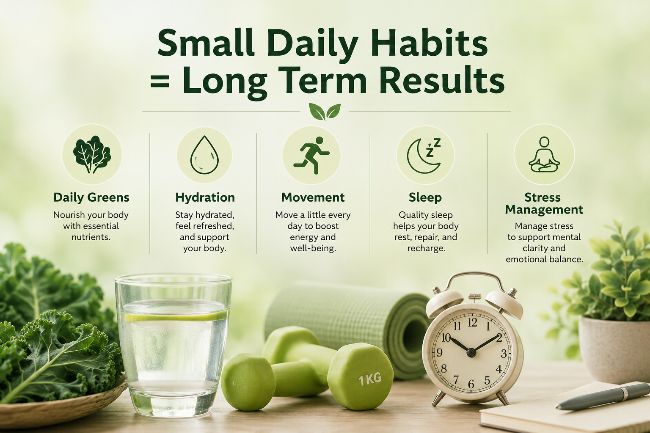
Creating a Wellness Routine That Lasts
The most effective wellness routines are often the simplest ones. They do not rely on constant motivation, strict rules, or dramatic lifestyle changes. Instead, they are built around habits that fit naturally into everyday life and can be repeated consistently.
When evaluating any health habit, it can be helpful to ask one simple question: can I realistically maintain this six months from now? If the answer is yes, the habit has a much greater chance of becoming sustainable. Long term success often depends more on practicality than intensity.
Daily greens represent one of those rare habits that can be both simple and meaningful. They do not require extensive planning or major lifestyle adjustments. Instead, they serve as a small daily reminder that wellness is built through consistency rather than perfection.
Over time, these small choices begin to shape larger outcomes. What starts as a simple habit can eventually become part of a broader lifestyle built around health, balance, and wellbeing.
Conclusion
The healthiest habits are not always the most impressive. More often, they are the ones that are simple enough to repeat consistently. Building a daily greens habit may seem like a small step, but small steps performed every day often lead to the greatest long term results.
Instead of focusing on dramatic transformations, consider the power of steady progress. Wellness is rarely built through one major decision. It is built through hundreds of small choices that accumulate over time. A daily greens habit is one example of how simple actions can contribute to a healthier and more balanced lifestyle.
A Simple Way to Support Your Daily Greens Habit
If you are looking for a convenient way to make daily greens part of your routine, Green Kale by Abeille d’Or provides four servings of kale in every sachet, making it easier to stay consistent even on busy days.