



Mental Clarity vs Mental Energy: Understanding the Difference
Table of Contents
Introduction
Most people have experienced days when their body feels awake but their mind struggles to focus. They may have enough energy to complete tasks, attend meetings, or move through their daily routine, yet concentrating on a single thought feels unusually difficult. On other days, the opposite happens. The mind feels sharp and capable, but physical fatigue makes it difficult to maintain productivity.
Because these experiences often occur together, many people assume mental clarity and mental energy are the same thing. In reality, they are two distinct aspects of cognitive wellbeing. Understanding the difference can help individuals make better decisions about their daily habits, routines, and overall approach to wellness.
In today’s fast paced environment, maintaining cognitive performance has become increasingly important. Modern life demands constant attention, frequent decision making, and the ability to process large amounts of information throughout the day. Whether at work, school, or home, mental performance plays a significant role in how effectively people navigate daily challenges.
Recognizing the difference between mental clarity and mental energy is the first step toward creating habits that support both.
What Is Mental Energy?
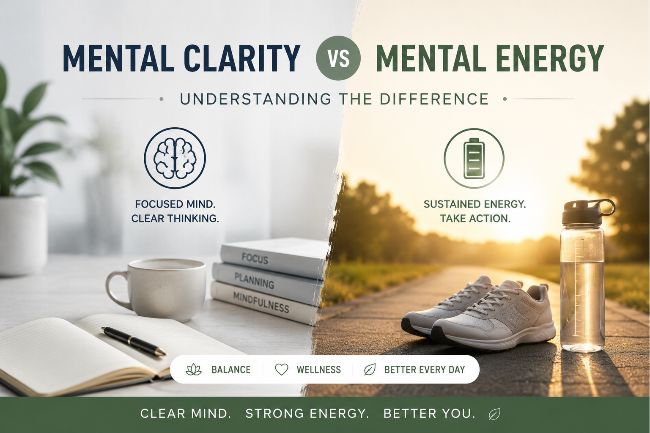
Mental energy refers to the brain’s capacity to remain engaged, alert, and productive throughout the day. It influences how motivated we feel to start tasks, maintain concentration, and continue working through challenges. When mental energy is high, individuals often feel capable of tackling responsibilities and staying productive for longer periods.
Many factors can influence mental energy. Sleep quality, nutrition, hydration, physical activity, and stress levels all play important roles. A demanding work schedule, insufficient rest, or prolonged periods of stress can gradually reduce mental energy and make even simple tasks feel more difficult.
Mental energy also fluctuates naturally throughout the day. Most people experience periods of higher and lower alertness depending on their biological rhythms, workload, and environment. Understanding these fluctuations can help individuals structure their routines more effectively and make the most of their productive periods.
While mental energy is important, having energy alone does not guarantee effective thinking. This is where mental clarity becomes equally important.
What Is Mental Clarity?
Mental clarity refers to the ability to think clearly, process information effectively, and maintain focus on the task at hand. It is often associated with feeling mentally organized, attentive, and capable of making decisions without excessive confusion or distraction.
A person can have high mental energy but low mental clarity. For example, someone may feel alert and restless yet struggle to focus on one specific task. Their thoughts may jump from one idea to another, making it difficult to prioritize or complete meaningful work.
Mental clarity is often influenced by factors such as sleep, stress management, environment, and overall wellbeing. When the mind is overloaded with information or distractions, maintaining clear thinking becomes more challenging. This is especially relevant in a digital age where notifications, messages, and constant connectivity compete for attention.
The ability to maintain mental clarity has become increasingly valuable because many modern jobs and responsibilities require sustained focus rather than simply having energy.
Why Modern Life Challenges Both
The modern world places unique demands on the brain. Most people consume more information in a single day than previous generations encountered in much longer periods of time. Emails, social media, news updates, messages, and digital notifications constantly compete for attention.
This environment can create what many experts describe as cognitive overload. The brain is continuously processing information, switching between tasks, and responding to new stimuli. While technology has improved efficiency in many ways, it has also increased mental demands.
At the same time, busy lifestyles often reduce opportunities for rest and recovery. Long working hours, irregular sleep schedules, and persistent stress can gradually drain both mental energy and mental clarity. Over time, this may leave individuals feeling mentally exhausted even when they have accomplished relatively little.
Understanding these challenges helps explain why so many people are actively seeking ways to support cognitive wellbeing and maintain healthy mental performance.

The Hidden Cost of Constant Multitasking
Many people take pride in their ability to multitask. It often feels productive to answer messages, attend meetings, check emails, and complete projects simultaneously. However, research suggests that the brain performs best when focusing on one task at a time.
Every time attention shifts between activities, the brain must reorient itself. These constant transitions consume mental resources and can reduce both efficiency and focus. While multitasking may create the illusion of productivity, it often contributes to mental fatigue and reduced clarity.
Over time, frequent task switching can make it harder to sustain deep concentration. This is one reason many people find themselves feeling mentally busy without feeling genuinely productive. Their mental energy is being consumed by constant transitions rather than directed toward meaningful work.
Creating periods of uninterrupted focus can help support both mental clarity and overall cognitive performance.
Building Habits That Support Cognitive Wellbeing
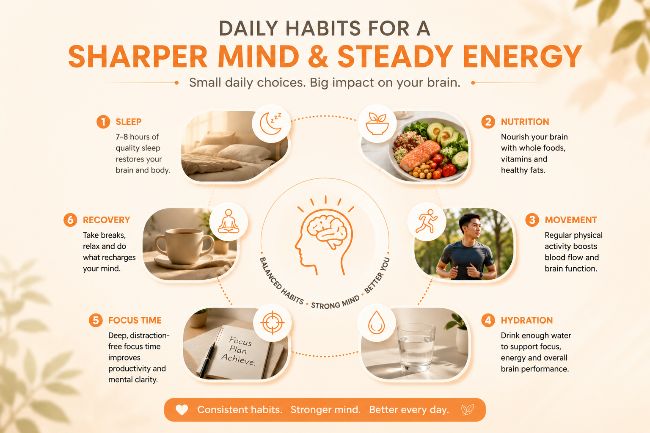
Mental performance is influenced by daily habits more than most people realize. Small lifestyle choices made consistently can contribute to how well the brain functions over time. While there is no single solution for maintaining cognitive wellbeing, certain habits are consistently associated with better mental performance.
Quality sleep remains one of the most important factors. Sleep allows the brain to recover, process information, and prepare for the next day’s challenges. Individuals who prioritize sleep often experience improvements in both mental clarity and energy levels.
Nutrition, hydration, physical activity, and stress management also play important roles. A balanced lifestyle helps create the conditions necessary for the brain to perform effectively. Rather than focusing on quick fixes, many experts recommend building sustainable habits that support overall wellbeing.
The most effective cognitive wellness strategies are often the simplest ones because they can be maintained consistently over time.
Mental Performance Is a Long Term Investment
Many people approach mental performance as something that needs to be improved immediately. They look for rapid solutions whenever they feel tired, distracted, or overwhelmed. While temporary strategies may provide short term support, long term cognitive wellbeing is usually built through consistent daily habits.
Just as physical fitness develops gradually, mental performance is influenced by repeated behaviours over time. Small improvements in sleep quality, nutrition, stress management, and daily routines can create meaningful benefits when maintained consistently.
This long term perspective can be reassuring. It means that cognitive wellbeing is not determined by a single day or isolated decision. Instead, it reflects the accumulation of habits that support overall health and resilience.
Viewing mental performance as an ongoing investment encourages individuals to focus on sustainable practices rather than temporary solutions.
Finding Balance Between Clarity and Energy
The most effective mental performance comes from balancing both mental energy and mental clarity. Energy provides the motivation and alertness needed to engage with tasks, while clarity helps direct that energy toward meaningful action. When one is present without the other, productivity can suffer.
For example, someone with high energy but low clarity may feel restless and distracted. Conversely, someone with good clarity but low energy may struggle to sustain focus for long periods. The goal is not simply to maximize one or the other but to create conditions that support both.
Achieving this balance often involves paying attention to the basics. Consistent sleep, balanced nutrition, regular movement, and stress management all contribute to a healthier foundation for cognitive wellbeing. These habits may seem simple, but they remain some of the most effective tools for supporting mental performance.
In a world filled with distractions and competing demands, maintaining both clarity and energy has become one of the most valuable skills a person can develop.

Conclusion
Mental clarity and mental energy are closely connected, but they are not the same thing. Energy helps us stay engaged and motivated, while clarity allows us to focus, think effectively, and make sound decisions. Both are essential for maintaining strong mental performance in today’s demanding world.
Rather than searching for quick solutions, it is often more effective to focus on the daily habits that support cognitive wellbeing over time. Small, consistent improvements in sleep, nutrition, stress management, and overall wellness can help create the foundation needed for both mental clarity and mental energy.
Supporting Your Daily Cognitive Wellness Routine
For those looking to complement a balanced lifestyle, IQ No.1 by Abeille d’Or contains bee pollen, royal jelly calcium, vitamin B complex, beta carotene, and rooibos tea extract as part of a formulation designed to support overall brain function, mental focus, and mood balance.