



Hazy Days in Malaysia: How to Adjust Your Daily Wellness Routine
Table of Contents
Introduction
1. Start With the Air Quality, Not What the Sky Looks Like
2. Your Outdoor Workout Can Wait
3. Pay More Attention to Your Indoor Environment
4. Hydration Still Deserves Your Attention
5. There Is No Food That Cancels Out Haze
6. Rest Is Part of the Routine Too
7. Know When Everyday Wellness Advice Is Not Enough
Conclusion
Introduction
For Malaysians, haze is an environmental issue that can occasionally become part of everyday life. The familiar signs are difficult to miss: a grey-looking sky, reduced visibility, the smell of smoke in the air, and conversations about the Air Pollutant Index, better known as the API. When conditions worsen, even ordinary plans such as going for a morning walk or exercising outdoors may need to be reconsidered.
Haze is more than an inconvenience. Air quality can affect how comfortably we go about our normal routines, particularly for children, older adults, and people with existing respiratory or cardiovascular conditions. During periods of poorer air quality, official health guidance and current API readings should always take priority over maintaining a normal schedule.
But haze can also be a useful reminder of something broader about wellbeing: our healthy routines need to respond to the environment around us. A habit that makes sense on a clear day may not make sense when outdoor air quality deteriorates. Looking after ourselves sometimes means adapting rather than simply pushing through.
So when hazy conditions arrive, the goal is not to search for a miracle food, drink, or supplement that supposedly “detoxifies” the effects of polluted air. It is to make sensible adjustments that reduce unnecessary exposure while continuing to support the fundamentals of everyday wellbeing, including nutrition, hydration, movement, rest, and recovery.
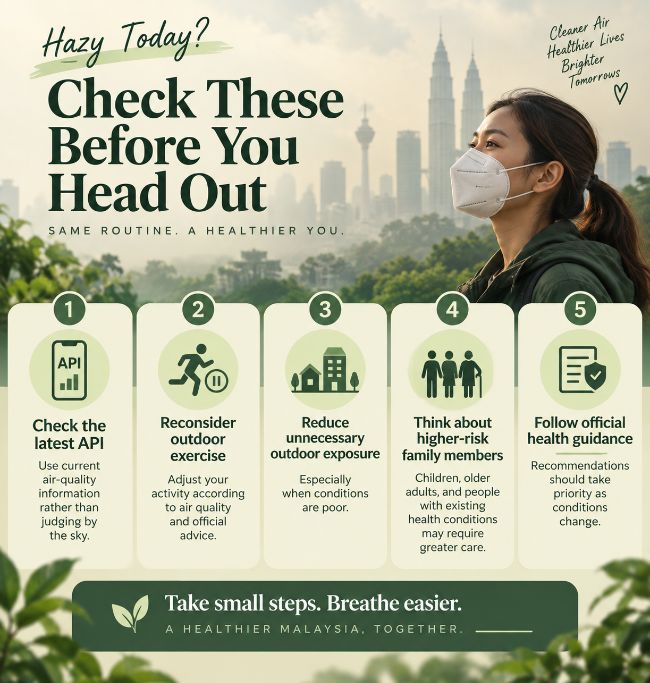
1. Start With the Air Quality, Not What the Sky Looks Like
One challenge with haze is that we cannot judge air quality accurately simply by looking outside. A hazy-looking morning may prompt concern, while another day may appear relatively normal. This is why checking official air-quality information is more useful than relying on appearance alone.
In Malaysia, the Air Pollutant Index provides information about ambient air quality. When haze occurs, checking the latest API readings can become as practical as checking the weather before deciding what to do outdoors. Conditions may also differ between locations, so the reading relevant to where you are matters.
This is particularly useful when planning exercise, children’s activities, outdoor work, or extended periods outside. Rather than automatically following the same routine every day, people can use current information and official recommendations to make more appropriate decisions.
The broader lesson applies beyond haze too. Healthy lifestyle habits should not become rigid rules. A good routine is one that can respond intelligently to circumstances. Sometimes the healthiest decision is not completing the activity you planned, but changing it because today’s environment is different.
2. Your Outdoor Workout Can Wait
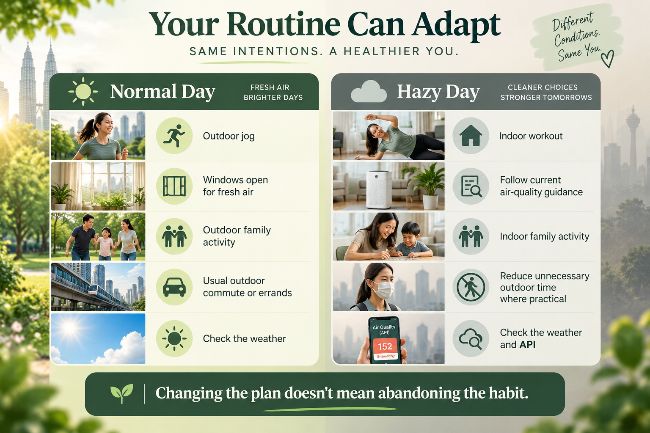
Consistency is important for an active lifestyle, but consistency does not mean exercising outdoors regardless of the conditions. During periods of poor air quality, outdoor exercise may need to be reduced, modified, postponed, or moved indoors according to official health recommendations.
Exercise increases how much air we breathe. A hard run, long cycle, or outdoor sports session therefore creates a very different breathing pattern from sitting indoors. This is why air quality deserves consideration before heading outside for strenuous activity during a haze episode.
Fortunately, changing one workout does not mean abandoning an active lifestyle. A home workout, gentle indoor mobility session, walking in an appropriate indoor environment, or simply moving more throughout the house can help maintain the habit of movement while circumstances are less suitable outside.
It can also be helpful to separate the habit from the activity. If your habit is “I move my body every morning”, running outdoors is only one way to fulfil it. That flexibility makes healthy routines more resilient, not weaker.
3. Pay More Attention to Your Indoor Environment
When outdoor air quality becomes a concern, we naturally spend more time indoors. That makes the quality of our indoor environment more important too.
Depending on current official advice and conditions, keeping doors and windows closed may help reduce the amount of outdoor pollution entering the home. Avoiding activities that unnecessarily worsen indoor air quality, such as smoking, is another practical consideration.
For households using an air purifier, proper placement and maintenance matter. Filters eventually need to be cleaned or replaced according to the manufacturer’s instructions. An air-cleaning device that has been forgotten in the corner for months should not automatically be assumed to be performing at its best.
There is also a behavioural side to spending more time indoors. When people are confined inside, movement can decrease and screen time can increase almost automatically. Building small indoor activity breaks into the day can help prevent a haze period from turning into several days of sitting almost continuously.
4. Hydration Still Deserves Your Attention
When haze and Malaysia’s warm weather occur together, it can be tempting to focus entirely on the air and forget the other basics of daily wellbeing. Hydration remains one of those basics.
A simple strategy is to make water easy to access throughout the day. Keep a bottle at your desk, take water with you when leaving home, and drink regularly rather than waiting until the end of a busy day to realise you have barely had anything.
It is worth remembering that hydration does not need to come from sweetened beverages. Malaysia’s drink culture gives us plenty of tempting cold options, particularly on hot afternoons, but plain water can remain the everyday default while favourite drinks are enjoyed more occasionally.
Food contributes to fluid intake too. Fruits and vegetables with a high water content can be incorporated into meals and snacks as part of a varied diet. The goal is not a special “haze diet”. It is simply to maintain good everyday habits when the disruption of haze makes normal routines feel different.
5. There Is No Food That Cancels Out Haze
Whenever environmental conditions become a health concern, wellness misinformation can spread quickly. Claims about “detox drinks”, special juices, herbal remedies, or particular foods that supposedly remove pollutants from the body can sound reassuring because they offer a simple solution to something we cannot easily control.
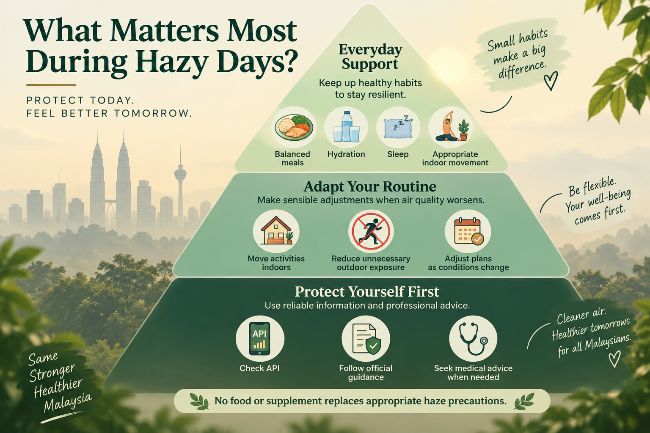
Nutrition is important, but food should not be presented as a substitute for reducing exposure or following public-health advice. Eating one particular ingredient cannot make poor air quality harmless.
A more responsible nutritional approach is much less dramatic. Continue eating balanced meals. Include a variety of vegetables and fruit. Consume suitable sources of protein and other nutritious foods. Drink enough water. Try not to let a disrupted schedule turn into days of irregular meals and convenience food if that can reasonably be avoided.
This distinction matters. Good nutrition supports general health, but it should not create a false sense of protection. During a haze episode, the most relevant actions relate to the air itself: monitoring conditions, limiting unnecessary exposure when advised, and paying attention to how you feel.
6. Rest Is Part of the Routine Too
Haze can change the rhythm of the day. Outdoor activities may be cancelled, children may spend more time indoors, exercise plans can change, and people may become more conscious of physical discomfort. For some, that disruption itself can make the day feel tiring or frustrating.
This is a good time to remember that a wellness routine does not have to operate at maximum intensity every day. If circumstances require you to slow down, reducing your expectations temporarily is not the same as giving up on your health.
Sleep remains particularly important. Maintaining a reasonably consistent bedtime, reducing unnecessary late-night screen time, and allowing enough opportunity for rest can help preserve some normality even when daytime routines change.
Recovery also means paying attention to symptoms rather than automatically pushing through them. If you experience concerning or persistent symptoms during a haze episode, especially if you have an existing health condition, seek appropriate medical advice rather than trying to manage everything through lifestyle changes alone.
7. Know When Everyday Wellness Advice Is Not Enough
There is an important limit to any lifestyle article about haze. Healthy food, hydration, sleep, and sensible routines are supportive everyday behaviours, but they are not medical treatments for the effects of air pollution.
Some people also need to be more cautious than others. Children, older adults, pregnant women, and individuals with existing respiratory or cardiovascular conditions may need to pay closer attention to official health advice and guidance from their healthcare professionals.
If you experience symptoms that are severe, unusual, worsening, or concerning, it is important to seek appropriate medical attention. Someone with an existing medical condition should follow the management advice provided by their healthcare professional rather than replacing it with general wellness recommendations.
This is why a sensible haze routine begins with reliable information. Monitor current conditions, follow Malaysian authorities’ recommendations, adapt your activities accordingly, and then support those precautions with the same fundamentals that matter throughout the rest of the year: balanced nutrition, hydration, movement when appropriate, and sufficient rest.
Conclusion
Haze is one of those situations that reminds us health does not exist separately from our surroundings. The environment changes, and sometimes our routines need to change with it.
That might mean replacing an outdoor run with an indoor workout, checking the API before taking the family outside, paying more attention to the air inside the home, or simply accepting that today’s routine needs to look different from yesterday’s. These are not interruptions to healthy living. They are examples of healthy living adapting to real circumstances.
At the same time, the fundamentals remain remarkably familiar. Eat balanced meals, drink enough water, stay appropriately active, protect your sleep, and pay attention to how you feel. None of these habits can make polluted air harmless, but they remain part of looking after your general wellbeing while you follow the precautions appropriate to current conditions.
Perhaps that is one of the most useful ways to think about wellness during haze season: do not search for a shortcut that promises to undo environmental exposure. Reduce the exposure you can, follow reliable guidance, and continue taking care of the everyday foundations of your health.
Supporting Your Everyday Wellness Routine
For those looking to complement a balanced diet with nutritional support as part of their regular wellness routine, Chlorella Gold by Abeille d’Or contains chlorella, CGF, iron, and B vitamins. It should be viewed as part of everyday nutrition, not as a treatment or protection against haze or air pollution.