



Why Your Brain Loves Routine More Than Motivation
Table of Contents
Introduction
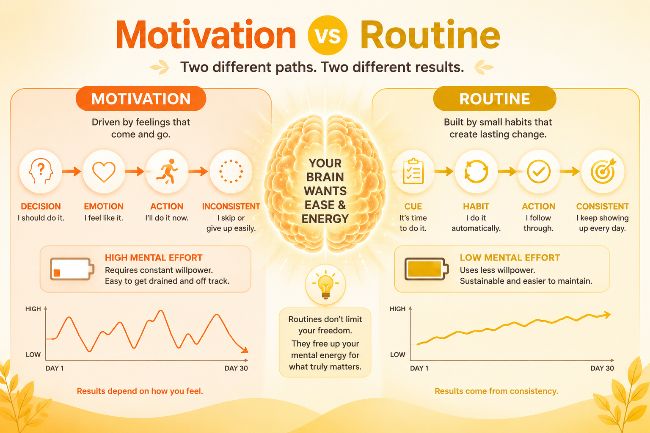
Many people believe that staying productive or maintaining healthy habits depends on having enough motivation. We often wait until we feel inspired before exercising, preparing healthy meals, organising our schedules, or tackling important tasks. On days when motivation is low, these plans are easily postponed.
The challenge is that motivation naturally comes and goes. It is influenced by our mood, energy levels, workload, sleep, and even the weather. Some mornings we wake up feeling enthusiastic, while other days simply getting started feels difficult. If our wellbeing depends entirely on motivation, consistency becomes almost impossible.
This is where routines become powerful. A routine removes much of the mental effort involved in deciding what to do next. Instead of asking yourself whether you feel like exercising or eating a balanced breakfast, those actions simply become part of your day. Over time, routines transform healthy behaviours from conscious decisions into familiar habits.
Our brains are naturally drawn to this kind of structure. Rather than limiting freedom, routines often create more mental space by reducing unnecessary decisions. The result is greater consistency, improved focus, and a lifestyle that feels easier to maintain.
1. Motivation Is Temporary, Habits Last Longer
Motivation often receives far more attention than it deserves. We celebrate moments of inspiration because they feel exciting, but they are usually short-lived. No one feels equally motivated every single day.
Think about the times you have started a new routine with enthusiasm. Perhaps you committed to exercising every morning, eating healthier meals, or reading before bed. During the first week everything feels manageable because motivation is high. Eventually, however, work becomes busier, family commitments increase, or life simply gets in the way.
This does not mean you have failed. It simply reflects the reality that motivation fluctuates. Relying on emotion alone makes healthy habits difficult to sustain over the long term.
Successful routines are rarely built on motivation. They are built on repetition. The more often we repeat an action, the less mental effort it requires, allowing the behaviour to continue even on days when motivation is low.
2. Your Brain Prefers Familiar Patterns
The human brain is constantly looking for ways to conserve energy. One of the most effective ways it does this is by creating patterns. When we repeat the same behaviour regularly, the brain begins to automate parts of the process, reducing the amount of conscious thought required.
This is why many daily activities happen almost automatically. Brushing your teeth, locking your front door, or preparing your morning coffee often requires very little deliberate thinking because these actions have become routines.
Healthy habits can work in exactly the same way. Eating breakfast at a similar time, going for an evening walk, or drinking more water each day gradually becomes easier because the brain begins to recognise these behaviours as normal.
Rather than fighting against your brain, routines work with its natural preference for familiarity and consistency.
3. Routines Reduce Mental Clutter
Every decision we make uses a small amount of mental energy. What should I eat? Should I exercise today? When should I go to bed? Individually these decisions seem insignificant, but together they can become surprisingly tiring.
A routine removes many of these unnecessary choices. Instead of debating whether to prepare breakfast, you already know what your usual breakfast looks like. Instead of deciding if today is a workout day, the routine has already answered that question.
This reduction in daily decision-making leaves more mental capacity for work, family, creativity, and solving more meaningful problems.
In many ways, routines act like shortcuts for the brain, allowing it to focus on what matters most instead of repeatedly making the same small decisions.
4. Consistency Builds Confidence
One overlooked benefit of routines is the confidence they create. Every time we follow through on a healthy habit, we reinforce the belief that we are capable of maintaining it.
This confidence is not built through dramatic achievements but through ordinary actions repeated consistently. Preparing breakfast, taking a walk after dinner, or drinking enough water may seem small, yet these habits strengthen our sense of self-discipline over time.
Missing a day does not erase progress. What matters is returning to the routine rather than abandoning it altogether. Long-term success comes from consistency, not perfection.
When routines become part of our identity, healthy living feels less like something we have to remember and more like something we naturally do.
5. Healthy Routines Support Better Focus
Mental focus is not simply about concentrating harder. It is also influenced by how much mental energy remains available throughout the day.
When basic habits such as sleeping, eating, and planning become predictable, the brain spends less energy managing them. This allows greater attention to be directed towards work, learning, relationships, and other important responsibilities.
Routine also helps reduce feelings of chaos during busy periods. Even when life becomes demanding, maintaining a few familiar habits provides a sense of stability and control.
This is one reason many high-performing individuals rely on simple daily routines. They understand that consistency often creates better results than constantly relying on motivation.
6. Start Small and Let Habits Grow
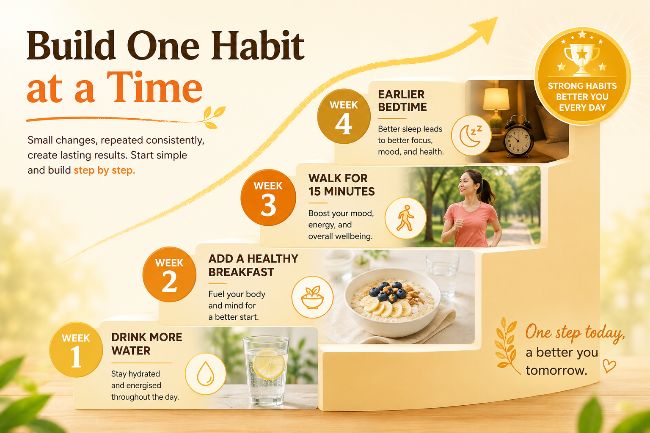
Many people make the mistake of changing everything at once. They create ambitious routines that require significant time, energy, and willpower. While these plans often feel exciting initially, they can quickly become difficult to maintain.
Smaller routines are usually much more sustainable. Drinking a glass of water after waking up, taking a ten-minute walk, or eating vegetables with one meal each day are simple actions that fit into almost any lifestyle.
Once these behaviours become automatic, adding another healthy habit feels much easier because the routine already exists.
Building one successful habit often creates momentum for many others.
7. Your Routine Should Work for You
There is no perfect daily routine that suits everyone. Some people enjoy early mornings, while others are more productive later in the day. Family responsibilities, work schedules, and personal preferences all influence what is realistic.
The best routine is not the most impressive one. It is the one that fits naturally into your lifestyle and continues working even when life becomes busy.
Rather than copying someone else’s schedule, focus on building routines that support your own health, energy, and wellbeing. Flexibility is just as important as consistency because routines should adapt as life changes.
When your routine works for you instead of against you, healthy habits become much easier to maintain over the long term.
Conclusion
Motivation can help us begin, but it is routine that helps us continue. While inspiration naturally rises and falls, consistent habits reduce mental effort and make healthy living feel more manageable.
By building simple routines that fit naturally into everyday life, we give our brains the structure they need to support focus, consistency, and overall wellbeing. Small actions repeated every day often create greater long-term results than occasional bursts of motivation.
Instead of waiting until you feel motivated, consider creating routines that make healthy choices the easier choice. Your brain will thank you for it.
Supporting Everyday Brain Wellness
For those looking to complement healthy routines with daily nutritional support, IQ No.1 by Abeille d’Or contains bee pollen, royal jelly calcium, vitamin B complex, beta carotene, and rooibos tea extract to support brain function, mental focus, and mood balance as part of a healthy lifestyle.