


Are We Getting Enough Nutrients as We Age? The Hidden Changes in Our Nutritional Needs
Table of Contents
Introduction
1. Why Our Nutritional Needs Change Even When Our Diet Stays the Same
2. Energy Requirements and Ageing
3. Protein Needs and Muscle Maintenance
4. Iron and B Vitamins: Small Nutrients With Essential Responsibilities
7. How to Recognise Nutritional Gaps Without Guessing
8. Supporting Everyday Nutritional Variety
Conclusion
Introduction
Think about the meals you enjoyed in your twenties. Perhaps breakfast was a quick packet of nasi lemak before work, lunch meant whatever was available near the office, and dinner was a generous family meal after a long day. Fast-forward twenty or thirty years, and those same meals may still feel familiar. Yet something important has changed. Our bodies are not necessarily using energy, maintaining muscle or absorbing certain nutrients in quite the same way they once did.
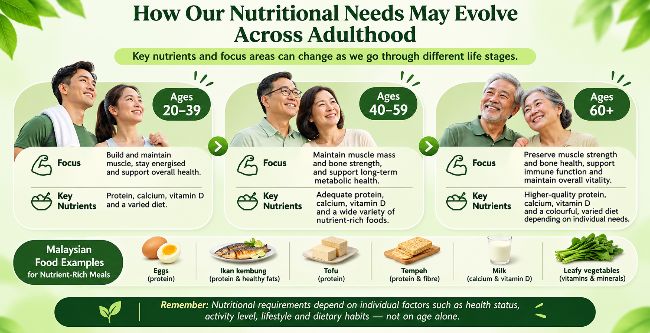
Ageing is often associated with visible changes such as greying hair, wrinkles and reduced physical stamina. However, some of the most meaningful changes happen beneath the surface. Our muscle mass can gradually decline, appetite may change, and certain medical conditions or medications can influence how effectively nutrients are absorbed and used. These developments do not happen identically to everyone, but they help explain why nutritional needs deserve attention throughout adulthood.
For Malaysian families, this is particularly relevant because food traditions often remain remarkably consistent across generations. Parents and grandparents may continue preparing familiar dishes using recipes passed down over decades. While these meals provide comfort and cultural connection, changing nutritional requirements sometimes mean that portion sizes, protein intake and food variety deserve a fresh look. Eating enough food does not always mean obtaining enough of every essential nutrient.
So, are we getting enough nutrients as we age, or are we relying on dietary assumptions that no longer reflect our bodies’ needs? Understanding nutritional needs as we age is less about following a completely different diet and more about recognising which nutrients deserve greater attention, how physiological changes influence nourishment, and how familiar Malaysian foods can continue supporting wellbeing through different stages of adulthood.
1. Why Our Nutritional Needs Change Even When Our Diet Stays the Same
One of the most significant nutritional changes associated with ageing involves energy requirements. As people grow older, changes in body composition and physical activity can reduce the amount of energy they need each day. Muscle tissue generally requires more energy to maintain than fat tissue, so gradual reductions in muscle mass can influence overall energy expenditure. However, individual requirements vary according to health, activity and body composition.
This creates an important nutritional challenge. Someone may require fewer calories than they did during earlier adulthood while still needing sufficient protein, vitamins and minerals. In other words, the amount of food needed for energy may decrease without an equivalent reduction in the body’s need for essential nutrients. This is why nutrition experts frequently emphasise nutrient density, which describes the amount of beneficial nutrients provided relative to a food’s energy content.
Malaysia’s Ministry of Health addresses this relationship in its Malaysian Dietary Guidelines for Older Persons 2023. The guidelines emphasise consuming a variety of wholesome foods within recommended servings, alongside appropriate physical activity, hydration and other health-supporting practices. They recognise that older adults can face nutritional challenges linked to physiological changes, medical conditions and differences in food intake. These recommendations encourage a more individualised approach to ageing well.
Consider two meals containing roughly similar amounts of energy. One consists mainly of refined carbohydrates and a sweetened beverage, while the other includes rice, fish, vegetables and fruit. Although both contribute calories, their protein, fibre and micronutrient profiles differ considerably. The lesson is not that familiar carbohydrate-rich foods should be avoided. Rather, as nutritional needs evolve, the overall quality and variety of what fills our plates become increasingly important.
2. Protein Becomes Especially Important for Maintaining Muscle
Muscle health is one of the most overlooked aspects of nutrition during adulthood. Beginning in midlife, many people gradually experience changes in muscle mass and strength, although the rate varies considerably. Age-related muscle loss can eventually affect everyday activities such as climbing stairs, carrying groceries or rising from a chair. Adequate protein intake, combined with appropriate physical activity, contributes to maintaining muscle tissue.
Protein provides amino acids that the body uses to build and repair tissues. With ageing, muscles may become less responsive to the signals that normally stimulate muscle protein synthesis, a phenomenon sometimes described as anabolic resistance. This helps explain why older adults may benefit from paying closer attention to protein intake and distribution across meals rather than assuming that a small serving at dinner is always sufficient.
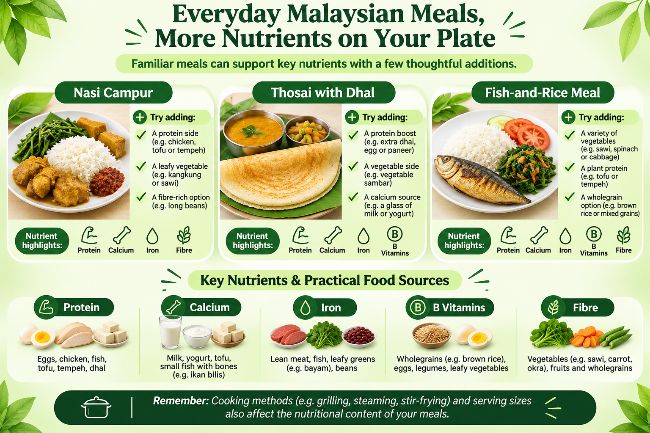
Fortunately, Malaysian cuisine offers numerous accessible protein sources. Fish, chicken, eggs, tofu, tempeh, dhal and beans can all contribute to daily intake. A breakfast containing eggs, a lunch with fish and a dinner incorporating tofu or legumes provides opportunities to distribute protein throughout the day. Portions should reflect individual requirements, especially for people with medical conditions that affect protein recommendations.
Protein alone is not the complete answer. Resistance activities, such as supervised strength training, suitable body-weight exercises or other muscle-strengthening movements, play an important role in preserving physical function. Nutrition and movement work together to support muscle maintenance. Rather than focusing only on body weight, adults can benefit from recognising muscle strength and everyday functional ability as meaningful aspects of healthy ageing.
3. Calcium and Vitamin D: Looking Beyond Bone Health
Bones are living tissues that undergo continuous renewal throughout life. Calcium is essential for maintaining their structure, while vitamin D helps the body absorb and use calcium effectively. During younger adulthood, the balance between bone formation and breakdown generally supports the development and maintenance of bone mass. With ageing, especially following menopause, changes in this balance can contribute to gradual bone loss.
This makes adequate calcium intake important across adulthood, not only after someone begins experiencing bone-related concerns. Dairy products such as milk and yoghurt are familiar sources, but Malaysians can also obtain calcium from calcium-set tofu, certain fortified foods and fish with edible bones, including sardines. Some green vegetables contribute calcium as well, although their amounts and absorption vary.
Vitamin D presents a different consideration. Our bodies can produce it when the skin is exposed to ultraviolet B sunlight, but production depends on numerous factors, including the time spent outdoors, clothing, skin characteristics and age. Living in sunny Malaysia does not automatically guarantee adequate vitamin D status. Food sources include certain fish, egg yolks and fortified products, although dietary intake alone may be insufficient for some individuals.
Calcium and vitamin D requirements are not identical for everyone. Age, sex, dietary intake, health conditions and certain medications can influence individual needs. Excessive supplementation is not automatically beneficial and may carry risks. The more useful approach is to assess regular dietary sources, consider appropriate professional advice when needed and recognise that bone health also depends on physical activity and broader nutritional adequacy.
4. Iron and B Vitamins: Small Nutrients With Essential Responsibilities
Iron and B vitamins receive attention in discussions about energy, yet their physiological roles are frequently misunderstood. Iron is needed to produce haemoglobin, the protein in red blood cells responsible for transporting oxygen. Several B vitamins help the body process carbohydrates, proteins and fats, while vitamin B12 and folate contribute to normal red blood cell formation and other important functions.
Iron requirements change across life stages. Women who menstruate generally have different iron needs from women after menopause, while pregnancy can substantially increase requirements. Men and older adults also require iron, but routine supplementation is not appropriate without considering individual circumstances. Unexplained iron deficiency in older adults can sometimes indicate an underlying medical issue requiring investigation.
Vitamin B12 deserves particular attention because its absorption can become more complicated with age. B12 from food normally requires several digestive processes before it can be absorbed. Certain gastrointestinal conditions and medications, including long-term use of some acid-reducing medicines or metformin, can interfere with this process. People following diets that exclude animal products may also need reliable fortified foods or appropriate supplementation.
Malaysian meals provide opportunities to obtain these nutrients through fish, meat, eggs, legumes, leafy vegetables and fortified foods. Pairing plant-based iron sources with vitamin C-rich foods, such as guava or citrus fruit, can improve non-haem iron absorption. Nevertheless, persistent tiredness, weakness or neurological symptoms should not simply be attributed to ageing or presumed nutrient deficiencies. Proper assessment helps identify whether nutrition, medication or another health issue is responsible.
5. Why Appetite, Digestion and Absorption Deserve More Attention
Not every nutritional difficulty begins with choosing the wrong foods. Sometimes, the challenge involves eating enough in the first place. Appetite can change with age due to alterations in taste and smell, medication effects, emotional wellbeing or existing medical conditions. For some older adults, meals that once felt comfortable may become too large, making it harder to obtain sufficient nourishment.
Dental and swallowing difficulties can further complicate eating. Someone experiencing discomfort when chewing may avoid meat, crunchy vegetables or other nutrient-rich foods. Over time, these substitutions can reduce dietary variety and potentially affect protein or micronutrient intake. Adjusting food textures, such as choosing softer fish, eggs, well-cooked vegetables and suitable soups, may help, alongside appropriate dental or medical care.
Digestion and absorption can also be affected by specific health conditions rather than ageing alone. Gastrointestinal disorders, previous surgery and certain medications may influence the absorption of nutrients. It is therefore misleading to assume that all older adults absorb nutrients poorly. Many continue to digest a varied diet effectively, while others require individualised assessment and dietary adjustments.
Social circumstances matter too. An older person living alone may cook less frequently or lose interest in preparing elaborate meals. Others may depend on family members for shopping and food preparation. Shared mealtimes, accessible ingredients and familiar dishes adapted to individual needs can make nourishment more enjoyable. Good nutrition is not simply a matter of knowing what to eat; it also depends on having the appetite, ability and opportunity to eat well.
6. Are Common Malaysian Meals Providing Enough Nutritional Variety?
Malaysian food culture offers impressive diversity, yet dietary variety is not guaranteed simply because many dishes are available. A person might alternate between nasi lemak, fried noodles and rice with gravy throughout the week while consuming relatively small amounts of vegetables, fruit or protein. These meals can provide energy and enjoyment, but their nutritional adequacy depends on ingredients, portions and what is eaten across the rest of the day.
One useful way to evaluate a meal is to identify its main nutritional components. Does it contain a meaningful protein source? Are vegetables present in a substantial amount? Is there an opportunity to include fruit, whole grains or other fibre-containing foods? A plate of economy rice, for instance, can offer considerable variety when it includes fish or tofu alongside different vegetables, rather than consisting predominantly of rice and sauce.
Breakfast provides another opportunity for improvement. Traditional choices such as wholemeal bread with eggs, thosai with dhal or oats accompanied by milk and fruit can contribute different combinations of nutrients. No single breakfast is ideal for everyone, and cultural preferences should remain part of the conversation. The objective is to create more opportunities for nutrient-rich foods throughout the day without requiring unfamiliar ingredients or complicated recipes.
The Ministry of Health’s Suku Suku Separuh approach remains a useful visual reference for balanced meals, although individual requirements may call for adjustments. Approximately half the plate is allocated to vegetables and fruits, with the remaining portions divided between carbohydrate foods and protein sources. For older adults with small appetites, nutrient density and adequate protein may require particular attention beyond plate proportions. Variety, suitability and sufficient overall intake matter more than achieving a perfectly arranged plate.
7. How to Recognise Nutritional Gaps Without Guessing
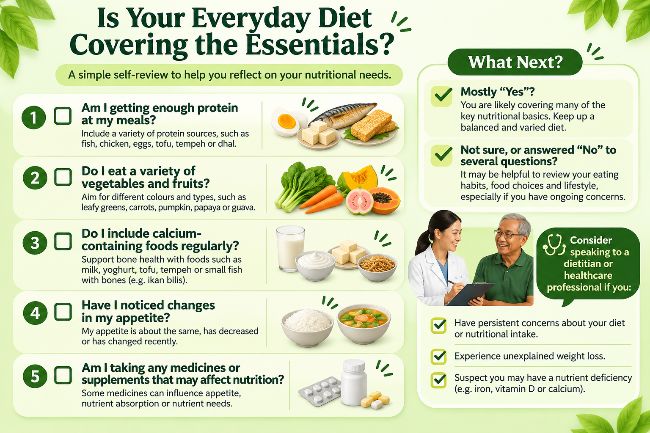
One of the challenges of nutritional wellbeing is that an inadequate nutrient intake does not always produce obvious early symptoms. People may continue their normal activities while consuming less than the recommended amount of certain vitamins or minerals. Conversely, tiredness, poor concentration or changes in appetite can have many causes unrelated to diet. Symptoms alone cannot reliably identify a specific deficiency.
Malaysia’s Recommended Nutrient Intakes provide scientifically informed reference values for different population groups. These recommendations consider factors such as age and sex, with additional considerations for particular physiological circumstances. However, a recommended intake is not a personal diagnosis. It provides a reference for evaluating dietary adequacy rather than determining that an individual requires supplements whenever their intake appears imperfect.
A practical starting point is to examine the foods consumed over several ordinary days. Looking at the frequency of vegetables, fruits, legumes, protein sources and calcium-containing foods may reveal patterns worth discussing with a qualified dietitian. It can also help to consider changes in appetite, unintentional weight loss, medication use and any difficulty preparing or consuming meals. These observations provide useful context without encouraging unnecessary self-diagnosis.
Supplements may be appropriate when dietary intake is insufficient, a deficiency is identified or a healthcare professional recommends them for specific circumstances. They should not automatically replace varied meals or be treated as protection against all age-related changes. Certain nutrients can be harmful when consumed excessively, and supplements may interact with medicines. The most responsible approach combines food-based nutrition, individual assessment and appropriate professional guidance.
Conclusion: Healthy Ageing Begins With Understanding What Our Bodies Need
Ageing changes many aspects of life, and nutrition is no exception. Our energy requirements, muscle maintenance, bone health and ability to obtain sufficient nutrients can evolve across adulthood. Yet these changes should not be interpreted as evidence that growing older inevitably means becoming unhealthy. Individual experiences vary, and appropriate nutrition remains a valuable way to support physical function and everyday wellbeing.
Perhaps the most important shift is moving from simply eating enough food to considering whether our meals provide enough nutritional value. Protein, calcium, iron, B vitamins and other essential nutrients each play distinct roles, while dietary variety helps provide the broader combination of nutrients our bodies require. Familiar Malaysian foods can remain central to this approach, offering both cultural enjoyment and meaningful nourishment.
Good nutrition also requires flexibility. Someone in their forties may have different priorities from a parent in their seventies, and two people of the same age may have entirely different nutritional needs. Rather than following rigid age-based rules or assuming that supplements are always necessary, we can make more informed decisions by understanding our diets, recognising changing circumstances and seeking professional advice when appropriate. Healthy ageing is not about trying to remain nutritionally unchanged. It is about providing the body with what it needs at each stage of life.
Supporting Everyday Nutritional Variety
A varied diet remains the foundation of nutritional wellbeing throughout adulthood. Abeille d’Or Chlorella Gold contains chlorella, which naturally provides nutrients including iron, B vitamins and Chlorella Growth Factor (CGF). It may be considered as a complementary nutritional option within an appropriate daily routine, alongside balanced meals rather than as a replacement for whole foods or individualised healthcare advice.